
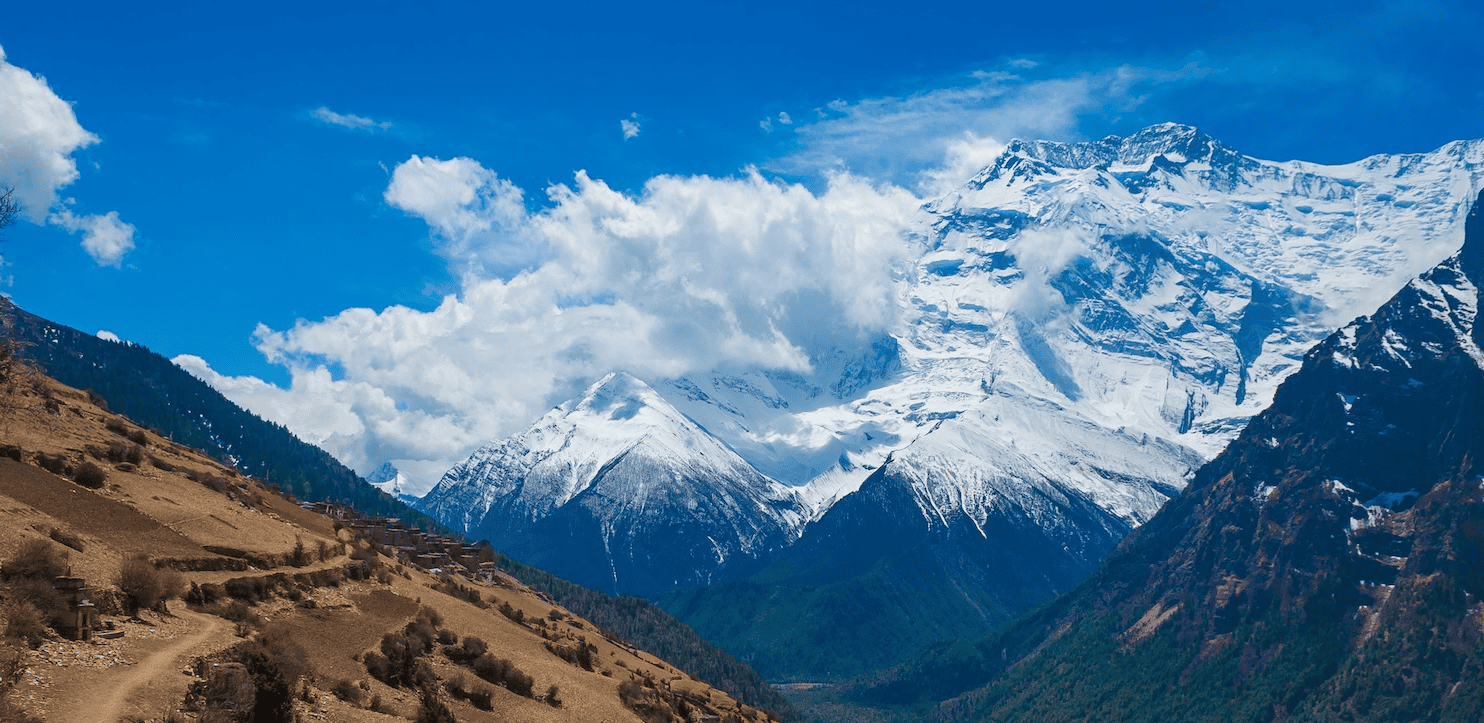
The 8,163 meter (26,781 feet) Mount Manaslu is the world’s 8th tallest peak. Located in west-central Nepal, close to the country’s border with China, Manaslu is also called Kampunge and Kutang. The Manaslu circuit is open for expeditions and trekking. Its towering valleys and ridges are full of snow and offer various approaches from all directions, which lead up to the peak. The surrounding landscape is stunning.
Nepal offers many beautiful treks like,
Everest Base Camp (EBC) Trek
Everest Gokyo Lake Trek
Annapurna Base Camp Trek
Langtang Trek
Upper Mustang Trek
Dhaulagiri Circuit Trek
Nar Phu Valley Trek
Introduction to the Manaslu Circuit
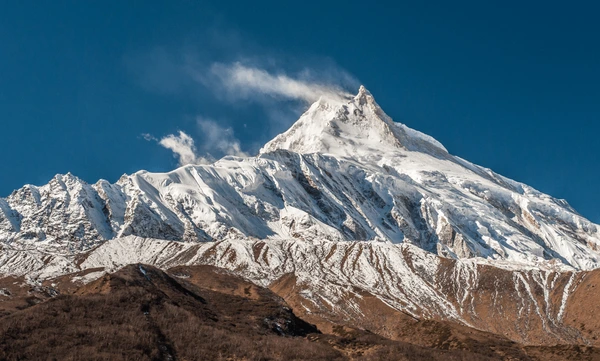
The Manaslu circuit trek stand out from them all as it is less crowded but as picturesque and challenging as any other trekking route in the country. The EBC route can get very crowded, especially in the peak season, as it is extremely popular worldwide. The Manaslu circuit, on the other hand, is an off-the-beaten-path journey. It is one of the most underrated trekking expeditions.
The trail will lead you up to the base of the peak and around it. Along the way, you will stay each night in a different Tibetan village, learning about the local culture, dress, and food habits. You will pass through stunning landscapes, particularly in the last few days of the Manaslu circuit in Nepal as you enter the Manaslu conservation area and cross the 5000 meter elevation. The fascinating beauty of the Tsum Valley and Larkya La Pass will forever be etched in your memory.
The Manaslu circuit trek offers everything you want – adventure, challenge, stunning landscapes, interaction with the locals, ancient Tibetan culture, and eventually a sense of fulfillment as you complete the Manaslu circuit.
Manaslu Circuit Trekking: A Detailed Itinerary
This trek is highly recommended for those who love the Himalayas and want to avoid the crowds of the EBC trek and Annapurna Circuit. Its highlights include the serene landscape, authentic Tibetan villages, and the highest point, which is the Larkya La Pass.
Highlights of the Manaslu circuit trek Nepal –
Less crowded than the Annapurna and Everest Base Camp circuit.
A remote and wild trek with stunning landscapes.
Lower elevations have subtropical forests. You will reach the cold and high alpine zone around Larkya La.
Regular teahouses.
Tsum Valley, the Buri Gandaki gorge.
The Manaslu circuit distance is about 180 kilometers or 110 miles. The trek can be completed in anything between 13 and 18 days (Kathmandu to Kathmandu), depending on how much distance you are willing to walk each day. If you are a beginner and want to space it out, then the entire trip can even be extended up to 40 days (KTM to KTM).
The trekking trail will follow an ancient salt-trading route along the Budhi Gandaki gorge and river. You will see 10 peaks over 6,500 meters, including a few that have an elevation of 7,000 + meters (23,000 ft.).
Day-by-Day Itinerary Overview
Here is an overview of the day-by-day Manaslu circuit itinerary.
Day 1 – Arrival in Kathmandu.
Check in to your hotel, rest, and prepare for the long trek ahead. Of course, you can extend your stay in the city to see the many attractions of Kathmandu.
Day 2 – Kathmandu to Machhakhola
The Machhakhola village is the starting point of Manaslu circuit trekking. On the 8-9 hour journey, you will ascend into the hills from the Kathmandu valley and pass through rushing rivers, cascading waterfalls, and picturesque villages. You will get views of Mount Manaslu and the Ganesh Himal range.
Day 3 – Machakhola to Jagat
This is the first official day of walking in your Manaslu circuit itinerary. The trail moves uphill gradually. You will cross the Maccha Khola over a suspension bridge and reach the Tatopani hot spring. The trail is more challenging from here to Doban, after which it descends to the Budhi Gandaki River.
After 6-7 hours of walking, you will reach Jagat village at 1290 meters. You will see many colorful prayer flags and traditional stone houses. The village was severely damaged in the 2015 earthquake but has now been renovated.
Day 4 – Jagat to Deng
The trail climbs gradually, passing through quaint villages, terraced fields, dense forests, waterfalls, small streams, and yaks. You will see many pines and Rhododendrons. There will be many viewpoints along the Budhi Gandaki River. Cross a suspension bridge to reach the Gurung village of Filim, which has monasteries, chortens, and Buddhist stupas. Deng at 1860 meters offers some of the best views of the snow-capped peaks in the area.
Day 5 – Deng to Namrung
The winding path takes you through lush meadows, forests, wheat and maize fields, and small traditional villages where you will see authentic Nepalese village lifestyle and the customs of the locals. Cross a suspension bridge over the Serang Khola River and trek along its north bank. You will go both uphill and downhill in this 5-6 hour trek before reaching Namrung.
Day 6 – Namrung to Lho
On the sixth day of your Manaslu circuit trek itinerary, you will pass through a ridge and get close-up views of the Pungen Glacier and Peak 29. Of course, giving you company will be the snow of Mount Manaslu. You will reach Lho village in 6-7 hours. It is a large settlement with a Gompa and a school. You will get stunning views of Manaslu from the Gompa.
Day 7 – Lho to Samagaun
Walt along barley fields to reach Lihi, which offers breathtaking views of Himal Chuli and Ganesh Himal. The trail descends from here to reach a valley where you will cross the Hinang Khola. There is a steep climb on the other side of the river and then descend to the Damodar Khola. A gentle uphill trail will take you to the Pungyen Gompa and then your Samagaon teahouse where you will rest for the night.
Day 8 – Acclimatization at Samagaon
You have already covered half of the Manaslu circuit trekking map and deserve a break at this time. This is your off day, a day you need to use to get acclimatized to the higher altitudes you will be climbing soon. Go on short acclimatization treks for a couple of hours. Visit the viewpoints, local monasteries, and grassy moorlands.
Kargya Chholing Monastery, Labrang Gompa, and Pungyen Gompa all offer breathtaking views. Relax in your tea house in the evening.
Day 9 – Samagaon to Samdo
The trail goes down to the Budhi Gandaki and then climbs up, passing through a juniper tree forest. Cross a wooden bridge and climb up to a ridge. You will then walk through a barren landscape that leads up to the Samdo village at 3800 meters.
Today you will walk for only 3-4 hours. Throughout the trek, you will get views of Manaslu, Dharamsala, Samdo Peak, and Siachen Glacier. If you are lucky, you can see wildlife like blue sheep and Himalayan marmots.
Day 10 – Samdo to Dharamsala
On this day, you will descend gradually, winding through alpine meadows and a rugged landscape. Follow the Budhi Gandaki River and reach Larkya bazaar and then the Pana Danda Valley. Grassy slopes will then lead you to the Syacha Khola Valley. There is a viewpoint that offers majestic views of the Syacha Glacier.
In 4-5 hours, you will reach Dharamsala, which is also the base camp of the Larke La Pass expedition.
Day 11 – Dharamsala to Bimthang
This is an important day in your Manaslu circuit trek in Nepal as you will pass the highest point, which is the Larkya La Pass at 5106 meters. You will climb gradually to reach the frozen lakes. The pass and your trek up to it offer magical views of Larke Peak, Pawar Peak, Kang Garu, Cheo Himal, Gyaji Kung, Himlung Himal, Mt. Annapurna II, and other peaks.
The trail also passes through glacial lakes, lush valleys, and rural villages. You can see many endangered wildlife today. Descend gradually after crossing the pass and reach Dingboche Kharka and eventually the village of Bimthang at 3720 meters.
Day 12 – Bimthang to Tilje
To reach Tilje at 2300 meters, you will have to descend from the 3720 meters of Bimthang. Today’s trek will take approximately 7-8 hours and offer views of valleys and hills. It starts with a descent to Sangura Kharka and Hompuk and then climbs for a bit to reach Gho. Before reaching Tilje, you will pass through the Marsyangdi Valley. You can even walk up to Dharapani if you feel like it. Dharapani is a popular town with trekkers and climbers and has a police checkpoint.
Day 13 – Dharapani to Kathmandu
You have covered the entire Manaslu circuit distance. It is now time to return to Kathmandu as your Manaslu circuit itinerary has come to an end. Enjoy a scenic 8-10 hour drive to Nepal’s capital city.
Highlights of the Itinerary
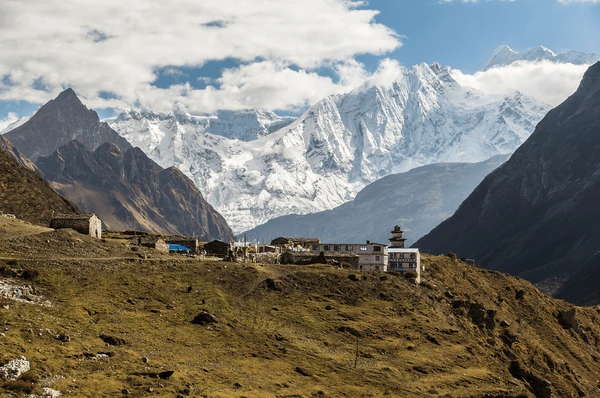
The Manaslu circuit trek in Nepal is an incredible journey. You will pass through many scenic trails and see mountain valleys, green hills, many snow-capped peaks, vast meadows, glaciers, high-altitude alpine lakes, Tibetan villages, and authentic local culture and food.
In the first few days, there will be pine and Rhododendron forests. You will cross many suspension bridges and walk along the Buri Gandaki River. The scenery is always changing as you cross the subtropical jungle at a lower altitude and enter the alpine and frozen zone. There will be a lot of snow in the last few days of the trek. The Manaslu circuit’s highest point is the Larkya La Pass, which is at an altitude of 5,106 meters or 16,752 feet. This is also one of Nepal’s longest passes in the Himalayas.
Manaslu circuit trek highlights
1. High altitude pass
Larkya La at 5,106 meters is one of the most beautiful mountain passes in Nepal. It joins the Manaslu and Annapurna regions.
2. Restricted zone
The region opened for tourists only in the early 1990s. Tourism is still restricted here. You will need a permit before you can do the trek.
3. Wildlife
You will pass through the Manaslu Conservation Area and have the chance to see wildlife like blue sheep, Himalayan marmots, yaks, and monkeys.
4. Local culture and customs
There will be many picturesque villages with monasteries, chortens, and Buddhist stupas. These are ethnic Magar, Gurung, Tamang, Sherpa, and Bhutia settlements. It’s a wonderful opportunity to learn about the local culture, traditions, and customs. See how they dress, learn about their music, and taste local food.
5. Scenic beauty
You will see rushing rivers, cascading waterfalls, picturesque villages, deep mountain valleys, green meadows, frozen lakes, natural caves, glaciers, and cross suspension bridges.
6. Snow-capped peaks
Stunning views of Mt. Manaslu, Ganesh Himal range, Pungen Glacier, Himal Chuli, Himlung Himal, Cheo Himal, Samdo peak, Nemjung, Pana Danda valley, Syacha Khola valley, Larke peak, Pawar peak, Kang Garu, Gyaji Kang, Himlung pyramid, Mt. Annapurna II, and Marsyangdi Valley.
7. Sunrise and sunset views
Throughout the trek, enjoy gorgeous sunrise and sunset views from various places.
8. Side trips
You can also do the Tsum Valley Trek, Annapurna Circuit Trek, and the Nar Phu Valley Trek.
This trek offers everything – adventure, natural wonders, cultural heritages, and religious monuments. If you are planning a high-altitude trek in the Himalayas, then the Manaslu Circuit Trek will be an excellent choice.
At the end of your trip or before you leave, you can see the heritage sites of Kathmandu like the Durbar Square, Boudhanath Stupa, Swayambhunath Temple, and the Pashupatinath Temple. On a day trip, you can visit Bhaktapur and Patan.
Comparing the Manaslu Circuit with Other Treks
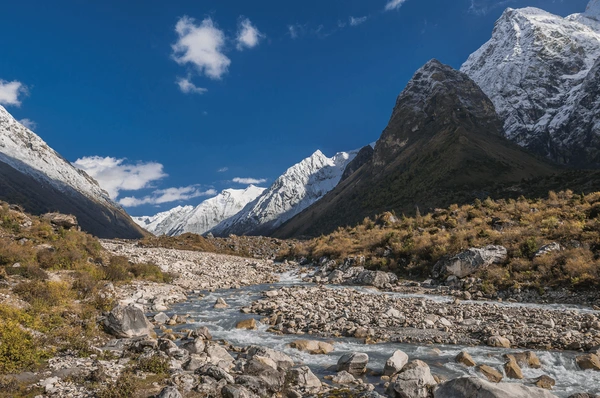
Nepal is a trekker’s paradise as the country offers many long-distance adventurous trekking options. Of course, the most famous are the Everest Base Camp Trek and the Annapurna Circuit. Increasingly, however, many nature and adventure lovers are opting for the Manaslu Circuit as it is equally beautiful and less crowded.
Manaslu Circuit vs. Annapurna Circuit
They are both enticing treks to enjoy the grandeur of the Himalayas. Manaslu is the eighth-highest mountain, while Annapurna I is the world’s 10th-highest peak. In both these treks, you will see spectacular scenery, you must cross a 5,000 + meter high-altitude pass, and will have several cultural experiences.
Manaslu vs. Annapurna circuit – which is harder?
When comparing the Annapurna circuit vs. Manaslu, you should know that the Manaslu Circuit is harder. Larkya La is more challenging than Thorong La (5416 m) in the Annapurna circuit. There will be a huge jump in altitude in the two days before you reach Larkya La. The 600-meter elevation gain between Samdo and Dharamsala can be difficult for those who do not have experience in high-altitude trekking. There is no place you can stop in between these two villages. You may want to spend a day before reaching the pass for acclimatization.
On the Annapurna Circuit, however, you will get many options to rest before reaching Thorong La. Also, the hike up to the Larkya La and also the descent is steeper and longer. As a result, Manaslu is more demanding.
Accommodation
You will find good tea houses on the Annapurna Circuit. There are many options, all offering moderate facilities. The cost will go up as you reach the higher altitudes. You may not always get hot showers in the higher places.
The trails are remote in Manaslu circuit trekking. There are fewer tea houses and the facilities are also more basic. Most tea houses offer shared bathrooms. However, yaks and porters are available on both these treks.
| Manaslu Circuit | Annapurna Circuit | |
| Location | West-central Nepal in the Gorkha District. | Central Nepal in the Annapurna Conservational Area. |
| Highest Point | Larkya La Pass (5,106 meter or 16,752 feet) | Thorong La Pass (5,416 meters or 17,769 feet) |
| Length | About 180 kilometers or 110 miles. | Between 160 and 210 kilometers depending on the route. |
| Difficulty | Steep ascents and descents. Rough trail. | Gradual ascents and descents. Marked and well-built trails. |
| Culture | Magar, Gurung, Tamang, Sherpa, Bhutia. | Thakalis, Manangis, and Gurungs with Tibetan influence. |
| Season | Spring and Autumn. Avoid during the monsoon. | Spring and Autumn are the best times but you can trek in the other seasons too. |
| Accessibility | Difficult road connectivity. More wild. | Modern road access. |
| Traffic | Moderate even in the peak season. Serene. | Crowded as there are no restrictions. |
| Peaks | Manaslu, Shringi Himal, Ganesh Himal, Himchuli, Annapurna II | Annapurna I, Annapurna II, Dhaulagiri I, Manaslu |
Manaslu Circuit vs. Everest Base Camp Trek
The altitude is always a challenge in the Himalayas. The Everest Base Camp trek will take you to about 5,364 meters or 17,598 feet. You can go even higher up to Kala Patthar at 5,644 meters, which offers stunning views of Mount Everest. The Manaslu circuit itinerary, on the other hand, will take you to an altitude of 5,106 meters or 16,752 feet at the Larkya La Pass. This is the highest level you will reach.
So, the EBC trek certainly has an edge in altitude. However, there are other factors when comparing Manaslu vs. Everest, like duration and acclimatization of the trek.
The EBC trek is shorter. The longer duration of the Manaslu circuit allows better acclimatization, which reduces the risk of Acute Mountain Sickness.
Landscape
The EBC trek begins from Lukla at 2,850 meters. You will pass through the Khumbu Valley and see Lhotse, Nuptse, Ama Dablam, and Mount Everest. The Manaslu Circuit starts from Machhakhola or Soti Khola. You have to cross Larkya La. Kala Patthar on the EBC trail, on the other hand, is a slight detour. You may or may not go there.
Both the treks offer stunning views with a few differences. For example, the landscape and vegetation are more diverse in the Manaslu trek. You will also have the chance to see more wildlife. The elevation gain is higher in the EBC trek.
Culture and Religion
If you compare Manaslu circuit vs. Everest base camp, you will also find cultural experiences. In the EBC circuit, you will pass through mostly Sherpa villages and get an insight into their traditions and cultures. The Everest region is mostly Buddhist. Most of the locals follow the Gelug, Kagyu, and Nyingma schools of Tibetan Buddhism.
On the Manaslu circuit, you will find a mix of ethnic groups, including Gurungs, Tamangs, Tibetans, and others. They practice different religions like Hinduism and Buddhism. However, the dominant religion in the higher altitude is Buddhism. Most of the locals follow the Kagyu and Nyingma schools of Tibetan Buddhism.
| Manaslu Circuit | Everest Base Camp | |
| Location | Gorkha District in west-central Nepal. | Sagarmatha National Park, Khumbu region. |
| Highest Point | Larkya La Pass (5,106 meter or 16,752 feet) | Kala Patthar (5,164 meters or 16,942 feet) |
| Length | About 180 kilometers | About 130 kilometers |
| Difficulty | Steep ascents and descents. Rough trail. | Higher altitude gain. Rapid ascent. |
| Culture | Magar, Gurung, Tamang, Sherpa, Bhutia. | Sherpas who follow Tibetan culture and Buddhism. |
| Season | Spring and Autumn. Avoid during the monsoon. | Open throughout the year. Best in the Spring and Autumn. |
| Traffic | Moderate even in the peak season. Serene. | Crowded because of its huge popularity. No restrictions. |
| Peaks | Manaslu, Shringi Himal, Ganesh Himal, Himchuli, Annapurna II | Mt Everest, Lhotse, Nuptse, Makalu, Ama Dablam, Pumori, Cho Oyu, Thamserku |
Manaslu Circuit Trek Cost and Required Permits
One of the biggest costs will be the airfare if you are coming from abroad. Also, remember that the Manaslu circuit trek cost will vary depending on the time of the year. The price will also depend on what is included in your package. Additionally, there is a cost for the permits too. Let us take a detailed look at the various costs and the permits you need for the trek.
Cost Breakdown for the Trek
In this Manaslu circuit guide, you will get a breakdown of the Manaslu circuit trek cost, including the Manaslu permit cost. This will help you plan and fund the trip better.
Cost for porters and guides
It is compulsory to have a licensed trekking guide for the Manaslu region because of its challenges. The per day cost of an English-speaking guide is between 25 and 30 USD. A trained guide can also help with first aid. The trail passes through isolated areas so it is essential to carry everything. You will need at least one porter. The cost is between 20 and 25 USD for each day.
Transportation cost
The trek begins from Machhakhola village or Soti Khola and it usually ends at Dharapani. There is no airport nearby, so you will have to drive to and from Kathmandu. On a bus, it will cost you between 5 and 8 USD per person. You can also rent a jeep, which can seat eight people. The rental price is between $150 and $190. Or, you can take a shared jeep with other travelers. Each seat costs between $40 and $50. However, it is not always possible to find another group that is going to the same region.
Accommodation
There are many tea houses in the various villages. The cost of a room is around $5 or $6. Do not expect a private bathroom. Some bathrooms have Western seats. You will get Wi-Fi in most places in the lower altitudes. The cost is $3 each night. Charging the camera, power bank, and phone will cost $2 to $3.
Food
You have to eat where you sleep during the trek. You can only get the food that you see on the menu in your tea house. Breakfast with bread, pancakes, omelets, muesli, oats, and fruits will cost $5 to $7. For lunch, you can choose from noodles, pasta, momo, or Nepalese dal and bhat at $4 to $8. Desserts like chocolates and pudding will cost around $3.
Packing cost
This is a variable cost depending on the hiking boot, warm socks, down jacket, inner clothing, head cover, windproof gloves, sunglasses, water bottle, and trekking pants you buy. You must also have trekking poles, chocolate bars, and energy drinks. Add to this the cost of travel insurance that covers high-altitude trek rescue.
Miscellaneous costs
During the trek, you will visit many monasteries, gompas, and temples. You may want to make a small donation. Also, keep some funds aside for tipping your guide and porter at the end of the trek. $50 should be sufficient unless there has been an emergency.
Essential Permits for the Manaslu Circuit
You will need various permits for the trek –
Manaslu Restricted Area Permit
Issued by the Nepal Government, this permit is needed for the Manaslu conservation area and Tsum Valley. The per-person cost is $100 for September to November and $75 for December to August. If you overstay for more than a week, then it will be $15 and $10 respectively for each day.
Annapurna Conservation Area Permit (ACAP)
The Manaslu circuit trek ends in the Annapurna region so you will also need this permit. It is issued from both Kathmandu and Pokhara. The ACAP Manaslu permit cost is $US 30 per person.
Is It Possible to Trek the Manaslu Circuit Without a Guide?
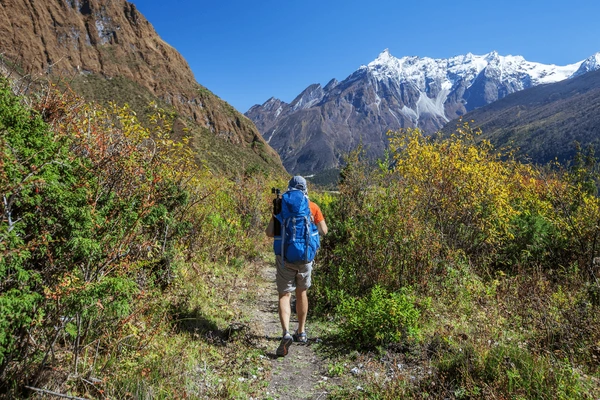
The Nepal government has made it compulsory that every trekker visiting the region must be accompanied by a registered guide. So, you cannot go to the Manaslu circuit without a guide. There can be consequences if you are not accompanied by a registered guide.
This is a restricted area and is still under-explored. It will be very challenging for a solo trekker without a guide. Plus, you will also pass through the Manaslu Conservation Area. The government has taken various steps to preserve its natural beauty, flora and fauna, promote eco-tourism, and improve the lives of the local communities.
Trekking with a Guide vs. Without a Guide
You may face the following challenges if you trek the Manaslu circuit without a guide –
1. The trail passes through a restricted area where the paths are often rough and challenging. It will be difficult for those who are not familiar with the route and terrain.
2. The Larkya La Pass at 5,106 meters can be full of snow. An expert can help you overcome this daunting section.
3. The Manaslu region is remote. There are fewer visitors compared to the EBC and Annapurna treks. You can be confused if you don’t have an expert with you.
4. A guide will make sure that there is minimum impact on the environment in this conservation area.
5. A trained guide will be able to help you in an emergency.
6. Your guide will make all the accommodation arrangements, selecting the best available tea houses on the route.
7. The person will help you acclimatize to the changing elevations.
Best Time to Trek the Manaslu Circuit
Take a detailed look at the best time for this trek and what weather challenges can you expect on the route.
Ideal Seasons for Trekking
The Manaslu circuit trek best time is usually the spring and autumn. The weather will be clear. You will also see more greenery, including various rhododendrons, wildflowers, anemone polyanthus, and golden flowers.
Spring – March to May is the best time for the hike. You will get stunning views of Mount Manaslu, many other peaks, and glaciers. It will not be very chilly even in the higher altitudes. Rhododendrons will blossom in the lower areas.
Autumn – September to November is also a good time. Bright skies will give you wonderful panoramas of the snow-capped peaks. The Manaslu circuit weather will be steady.
Weather Challenges During the Trek
The Manaslu circuit trek itinerary will take you to some of the highest altitudes of Nepal where the weather can change suddenly even at the best of times. A bright sunny day can quickly become cloudy and it can lead to snowfall. Rainfalls and snowstorms are common in the higher areas. This can cause slippery and muddy trails, which can increase the chance of an accident. You will need to be extra careful.
A snowstorm can also cause an avalanche at certain times of the year. Be extra careful when you are crossing the Larkya La Pass. It is always good to check the Manaslu circuit weather forecast beforehand.
Physical Challenges of the Manaslu Circuit Trek
The difficulty of mountain trekking in the Himalayas can be categorized by the altitude and number of days you need to walk. The Manaslu circuit trek is not the hardest as there are others where you must walk for more days. However, the altitude of Larkay La pass, the rough terrain, and the remoteness of the region can make it difficult for many trekkers.
How Difficult is the Manaslu Circuit?
This is a strenuous trek. It will take you to remote and rarely-visited corners of Nepal and offers many challenges. You will have to walk for many hours every day over a rugged terrain. It offers a test of both physical stamina and mental endurance.
Length – The 180-kilometer-long Manaslu circuit distance can be daunting, especially if you don’t have prior high-altitude trekking experience. The number of walking days can increase depending on your mental and physical condition.
The trail – It is challenging as the trail is very rugged at times. There will be many steep ascents and descents. You will have to cross several suspension bridges. At other times, there are only temporary wooden bridges over the rivers. Also, you will have to cross many landslide-prone zones.
Altitude – The high altitude is also a big challenge, especially at the Larkya La Pass. For many, the highest Manaslu circuit altitude of 5,160 meters is beyond their capabilities. The availability of oxygen will decrease as you move higher. It is essential to acclimatize well.
Unpredictable weather – It is possible to make a general prediction based on the season and month. However, in the high altitudes, there can often be localized conditions. The temperature can quickly drop from comfortable to freezing cold.
Altitude Sickness and Acclimatization Tips
The most common problem in high altitudes is AMS or Acute Mountain Sickness. Its symptoms include headache, nausea, vomiting, fatigue, loss of appetite, dizziness, and sleep disturbance. Do not neglect these symptoms as the condition can quickly worsen and cause major problems.
Stop immediately and rest. If you continue hiking, then it can even lead to HAPE (High Altitude Pulmonary Edema) where the lungs get affected, or HACE (High Altitude Cerebral Edema) which makes the brain swell. They are both dangerous conditions, requiring emergency evacuation.
Always respect the high Manaslu circuit altitude and take preventive measures. Stay properly hydrated, and eat nutritious meals. Climb down to a safe level. Even a 1,000-meter descent can help. Also, remember to carry Diamox tablets at all times. These pills will help you overcome the minor symptoms of altitude sickness.
What to Pack for the Manaslu Circuit Trek
You will be reaching remote corners of Nepal in your Manaslu circuit trekking. Yes, there will be a few villages on the route, but don’t expect any large stores in these places. So, it is essential to carry everything you may need on the trip. This Manaslu circuit packing list will help you.
Manaslu Circuit Packing List
Remember to carry the following –
Clothing
- Down jacket
- Down suit
- Primaloft trousers
- Primaloft jacket
- Waterproof jacket
- Thermal tops
- Short/long Polypropylene Sleeve Shirt for the lower altitude
- Liner gloves
- Thermal underwear
- Sun hat
- Thermal balaclava
- Sports bra (for women)
- Sunglasses
Climbing Gear
- Backpack
- Climbing helmet
- Harness
- Ice axe
- Trekking poles
- Headlamp
- Lithium spare batteries
Footwear
- Trekking shoes
- Warm socks
Personal Equipment
- Water bottle
- Vacuum flask
- Sunscreen
- Lip guard
- Toiletry bag with mirror
- Toilet roll
- Sanitary napkins (for women)
- Razor and shaving cream
- High-calorie snacks
Camping Equipment
- Sleeping bag
- Inflatable sleeping mattress
- Multi-tool knife
- Pee bottle
First-Aid & Medicines
- Diamox tablets
- Antibiotics
- Cough lozenges
- Painkillers
- Foot powder
- Bandages and plasters
- Water purification tablets
- Earplugs
- Eye drops
- Skin blister repair kit
- Hand sanitizer
- Insect repellent
- Moisturizer
Accommodation and Tea Houses Along the Route
The Manaslu circuit is one of the most remote treks in Nepal. Accommodation during the trek will be in the tea houses, which are located in the various villages you will reach at the end of each day. They offer basic amenities compared to the EBC and Annapurna Circuit.
The room is small but clean. Two to three guests can stay in each room. You will have a mattress, bed cover, pillow, and blanket. The room may also have a small table, chair, and a mirror. The bathrooms are also modest with Western or Indian toilets. Hot water is served in a bucket. You will rarely find an attached toilet on this route.
There is a central dining hall, usually with a heating system. Breakfast, lunch, and dinner are served as per the menu and what is available on that day. But the food is always fresh.
You will have to pay for Wi-Fi and to charge your phone, power bank, and camera.
The Cultural and Natural Wonders of the Manaslu Circuit
Nature’s spectacle is at its best in the Manaslu region. But not just the stunning views, this trek is also worth it for the cultural insights you will gain in this remote corner of the world.
Villages and Cultural Highlights Along the Manaslu Circuit
You will reach a new village at the end of each day’s walk. Each of these villages offers a unique culture and tradition, which you can see and learn about first-hand. You can learn about their customs, music, see how they dress, and how they talk. You can even try the traditional Nepalese dal and bhat and other local dishes.
There will be Magar, Gurung, Tamang, Sherpa, and Bhutia communities. The local people practice Hinduism and Buddhism. However, the dominant religion in the higher altitude is Buddhism. Most of the locals follow the Kagyu and Nyingma schools of Tibetan Buddhism. You can visit the temples, monasteries, and gompas. See the prayer flags and the stupas.
Natural Landscapes and Scenic Highlights
It is one of the most scenic journeys in the world. See the transition from the busy Kathmandu valley to the alpine wonder world, while passing through forests, villages, and deserted landscapes.
Highlights –
- Lush forests and waterfalls – In the lower altitudes, you will pass through lush pine, bamboo, and rhododendron forests. In between, there will be rushing rivers and cascading waterfalls, and the picturesque Budhi Gandaki River. You will have to cross many suspension bridges. It will be an experience crossing them over deep gorges and roaring rivers.
- Stunning mountain passes – You will reach the highest Manaslu circuit altitude when you cross the Larkya La Pass. The pass offers views of the range you are sure to remember for many years.
- Tsum and Nubri villages – When passing through the Tsum and Nubri regions, there will be many scenic villages, such as Samagaon, Jagat, and Samdo, where you will see traditional stone houses with intricately carved wooden windows.
- Glacial lakes – On the later stage of your Manaslu circuit trek itinerary, you will find glacial lakes like the Sama Gaun Lake and Birendra Tal. These pristine lakes offer stunning reflections of the surrounding peaks.
Conclusion: Why the Manaslu Circuit is Worth the Trek
The Manaslu circuit offers some of the best views you can get in the Himalayas. From deep gorges to lush forests, serene meadows, waterfalls, rivers, glacial lakes, to vibrant cultural experiences, the Manaslu circuit trek offers the complete package for all nature lovers and adventure seekers. You will have many unforgettable experiences. While navigating through the rugged terrain and connecting with the local communities, you will gain a deeper appreciation for the cultural richness and natural wonders of Nepal’s Manaslu region.

Awesome https://is.gd/tpjNyL
Awesome https://shorturl.at/2breu
Awesome https://t.ly/tndaA
Good https://rb.gy/4gq2o4
https://shorturl.fm/FIJkD
https://shorturl.fm/a0B2m
https://shorturl.fm/YvSxU
https://shorturl.fm/YvSxU
https://shorturl.fm/XIZGD
https://shorturl.fm/6539m
https://shorturl.fm/9fnIC
https://shorturl.fm/IPXDm
https://shorturl.fm/MVjF1
https://shorturl.fm/Kp34g
https://shorturl.fm/Xect5
https://shorturl.fm/PFOiP
Share our products, reap the rewards—apply to our affiliate program! https://shorturl.fm/wxoLV
Partner with us and earn recurring commissions—join the affiliate program! https://shorturl.fm/4L1rI
Tap into unlimited earning potential—become our affiliate partner! https://shorturl.fm/3B4SA
https://shorturl.fm/6Ij8t
https://shorturl.fm/caXkH
https://shorturl.fm/c1QrO
https://shorturl.fm/RbCjb
https://shorturl.fm/n8B4Y
https://shorturl.fm/b4iEH
https://shorturl.fm/6wcBR
https://shorturl.fm/nRI8o
https://shorturl.fm/hmP9z
https://shorturl.fm/aFcE6
https://shorturl.fm/IivcL
Superb website you have here but I was wondering if you knew of any discussion boards that cover the same topics discussed here? I’d really like to be a part of community where I can get advice from other experienced people that share the same interest. If you have any recommendations, please let me know. Cheers!
escort advertising Rio
https://shorturl.fm/xIhnk
Start earning instantly—become our affiliate and earn on every sale!
Monetize your audience—become an affiliate partner now!
Promote our products and earn real money—apply today!
Boost your income effortlessly—join our affiliate network now!